
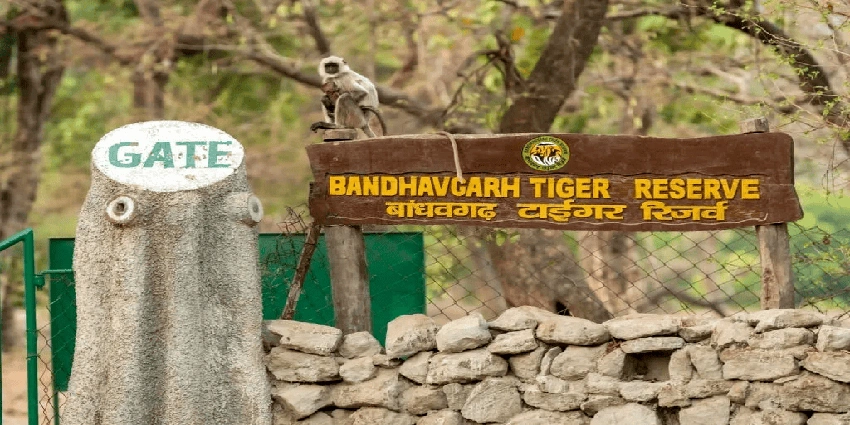
The history of Bandhavgarh National Park and Tiger Reserve in Madhya Pradesh is deeply connected with ancient legends, royal traditions, and wildlife conservation. The region has been known for centuries because of the historic Bandhavgarh Fort, which stands on a hill inside the forest. According to mythology, the name “Bandhavgarh” means “Brother’s Fort” and is believed to be associated with Lord Rama, who is said to have gifted this fort to his brother Lakshmana. Over time, the surrounding forests became home to rich wildlife and natural resources.
During the medieval period, the forests of Bandhavgarh were controlled by local rulers and later became the royal hunting grounds of the Maharajas of Rewa. The dense forests and abundant wildlife, especially tigers, made the area famous among royal families and visiting dignitaries. In 1968, the region was officially declared a national park to protect its wildlife and natural habitat. Later, in 1993, Bandhavgarh became part of India’s Project Tiger initiative and was recognized as an important tiger reserve. Today, the park is one of the most popular wildlife destinations in India and is known for having one of the highest densities of Royal Bengal Tigers.
Apart from its wildlife, Bandhavgarh is also known for its ancient archaeological sites scattered throughout the forest. The park contains several old temples, caves, and sculptures that date back many centuries. Many of these caves have inscriptions and carvings that reflect the cultural and religious practices of ancient times. Among the most famous monuments is the sacred Shesh Shaiya Vishnu Statue, which depicts Lord Vishnu reclining on the serpent Sheshnag. These archaeological remains show that the region was once an important cultural and religious center in central India.
The history of Bandhavgarh is closely connected with the royal family of Rewa, who ruled this region for many generations. The Maharajas of Rewa used the forest as their private hunting reserve and hosted many royal guests for hunting expeditions. However, over time, the royal family also played a role in protecting the forest and preserving its wildlife. Their decision to support conservation efforts helped in the transformation of the area from a hunting ground into a protected national park. Today, Bandhavgarh stands as a symbol of successful wildlife conservation and historical heritage.