
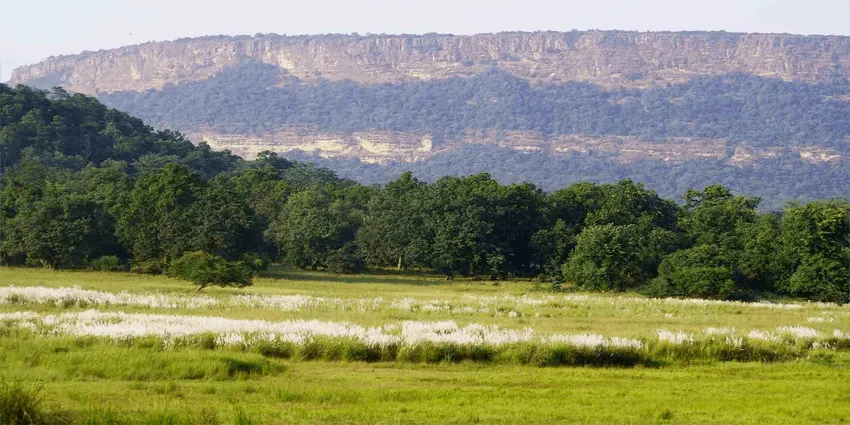
Bandhavgarh National Park is located in the eastern part of Madhya Pradesh and is known for its unique geographical landscape and rich natural beauty. The park lies within the Vindhyan mountain range, which gives the region its distinctive rocky hills, steep ridges, and fertile valleys. This varied topography creates an ideal environment for a wide range of wildlife species and makes the park one of the most popular destinations for jungle safari in India.
The terrain of Bandhavgarh consists of a mixture of dense forests, open grasslands, and rocky plateaus. These geographical features provide natural shelter and feeding grounds for animals such as the Bengal Tiger, deer, and many other species. The park also includes several natural caves, cliffs, and ancient hill formations that add to the ecological diversity of the region. The presence of the historic Bandhavgarh Fort on a high hill further highlights the unique landscape of the park.
The vegetation of Bandhavgarh National Park is mainly tropical dry deciduous forest. The area is covered with a wide variety of trees, shrubs, and grasses that thrive in the park’s climate and soil conditions. Forests in the park are dominated by sal trees, bamboo clusters, and mixed deciduous plants. These forests provide shade, food, and shelter for many animals and birds living in the park.
Large grasslands known as “chaurs” are another important feature of Bandhavgarh’s vegetation. These open meadows are formed in natural valleys and are often the best places to spot herbivores like spotted deer and sambar. The rich vegetation also supports many bird species, reptiles, and smaller mammals, contributing to the park’s diverse ecosystem.
The river system in Bandhavgarh plays an essential role in maintaining the park’s ecological balance. Although the park does not have very large rivers flowing through it, several seasonal streams and small water channels run across the forest. These water sources become especially important during the dry season when animals gather around them for drinking water.
Many small streams originate from the hills of the Vindhyan range and flow through the valleys and grasslands of the park. These streams help maintain soil moisture and support plant growth throughout the year. The presence of natural water bodies also attracts wildlife, making them excellent locations for observing animals during a jungle safari in Bandhavgarh.