
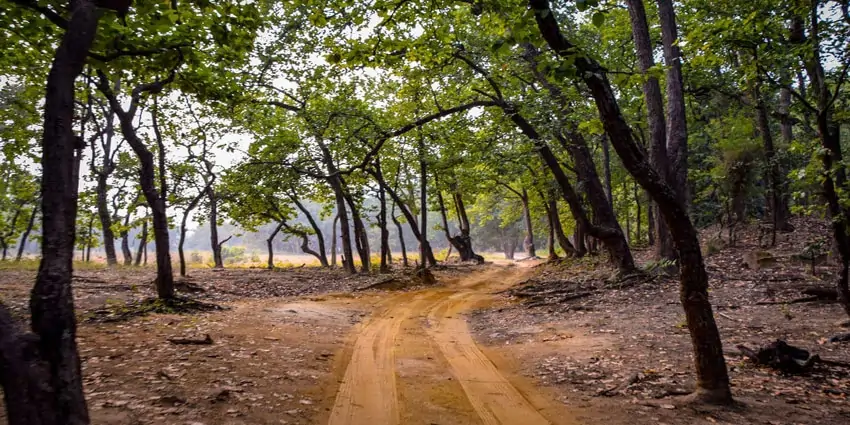
The forests of Bandhavgarh National Park are mainly dominated by dense sal trees that form the primary vegetation of the region. These tall sal forests create a thick canopy that provides shade and shelter for many species of wildlife. Along with sal, other important trees found in the park include teak, bamboo, jamun, arjun, and tendu. These trees play an important role in maintaining the ecological balance of the forest by providing food, nesting spaces, and protection for animals and birds. During different seasons, the trees change their appearance as leaves fall, new shoots grow, and flowers bloom, giving the forest a constantly changing landscape. The rich tree cover also helps maintain soil moisture and supports the diverse wildlife habitat within the park.
The forest floor of Bandhavgarh is filled with a wide variety of plants and shrubs that contribute to the biodiversity of the region. Many of these plants have medicinal value and are traditionally used by local communities. Shrubs and smaller plants grow beneath the larger trees, creating layers of vegetation throughout the forest. These plants provide food for insects, birds, and herbivorous animals. Flowering plants add color to the jungle landscape, especially during the monsoon and post-monsoon seasons. The presence of different plant species also supports pollinators such as butterflies and bees, which are important for maintaining the natural balance of the ecosystem. The plant life in Bandhavgarh forms an essential part of the food chain and supports the survival of many wildlife species in the park.
Grasslands are another important part of the vegetation found in Bandhavgarh National Park. Open meadows and grassy clearings are spread across several parts of the park and provide an important food source for herbivores. Animals such as spotted deer, sambar, nilgai, and gaur rely heavily on these grasses for grazing. The grasslands also allow better visibility, making them popular areas for wildlife sightings during jungle safaris. These open areas often attract predators like tigers and leopards because they provide opportunities to hunt grazing animals. The mixture of forests and grasslands creates a balanced habitat that supports the park’s rich wildlife population. Together, the trees, plants, and grasses of Bandhavgarh create a healthy ecosystem that sustains both flora and fauna in this famous wildlife reserve.